
Why sometimes I have to say “no” to tattooing over your existing work.
Why your old cosmetic tattoo may need to be removed first.
Cosmetic tattooing should enhance your natural features, not to create a permanent, solid block of colour in the skin.
Unlike traditional body tattooing, cosmetic tattoo is meant to be implanted more superficially into the skin and is intended to gradually fade out over time. This fading is important! It allows us to make subtle adjustments to the shape, colour and style as your face changes over the years. They are not intended to be forever!
How quickly a cosmetic tattoo fades can vary significantly from person to person. Skin type, sun exposure, skincare products, pigment choice, technique, your immune system and how many times the area has been tattooed can all affect how much pigment remains in the skin.
What does “over-saturated” mean?
Over-saturation happens when more and more pigment is added to an area before enough of the previous tattoo has faded.
Think of it like repeatedly colouring over the same area of paper. Eventually, adding another layer isn't going to make it look fresher or better, it's just going to become darker, denser and muddier.
This is something I see quite often with brows that have been repeatedly “refreshed” every 12–18 months, regardless of whether they actually needed more pigment.
Over time, those repeated layers can leave the skin holding a significant amount of old pigment. The brows may become very dark, grey, blue, red or uneven, and the original shape can become increasingly difficult to change.
Why we can’t just add more pigment.
When there's already a significant amount of pigment sitting in the skin, adding another layer doesn't erase, cover or replace what's underneath.
It simply adds more pigment.
This can make the tattoo progressively darker and denser over time, while also limiting our ability to adjust the colour or create a new shape.
If the existing tattoo is blue, grey, red, very dark or heavily saturated, those colours are still going to influence the final healed result.
This is why I won't simply keep tattooing over old work just because a client wants their brows “refreshed”.
Sometimes the best thing we can do for your brows is actually stop adding pigment.
If your brows look like any of these examples, you will require some form of removal first.
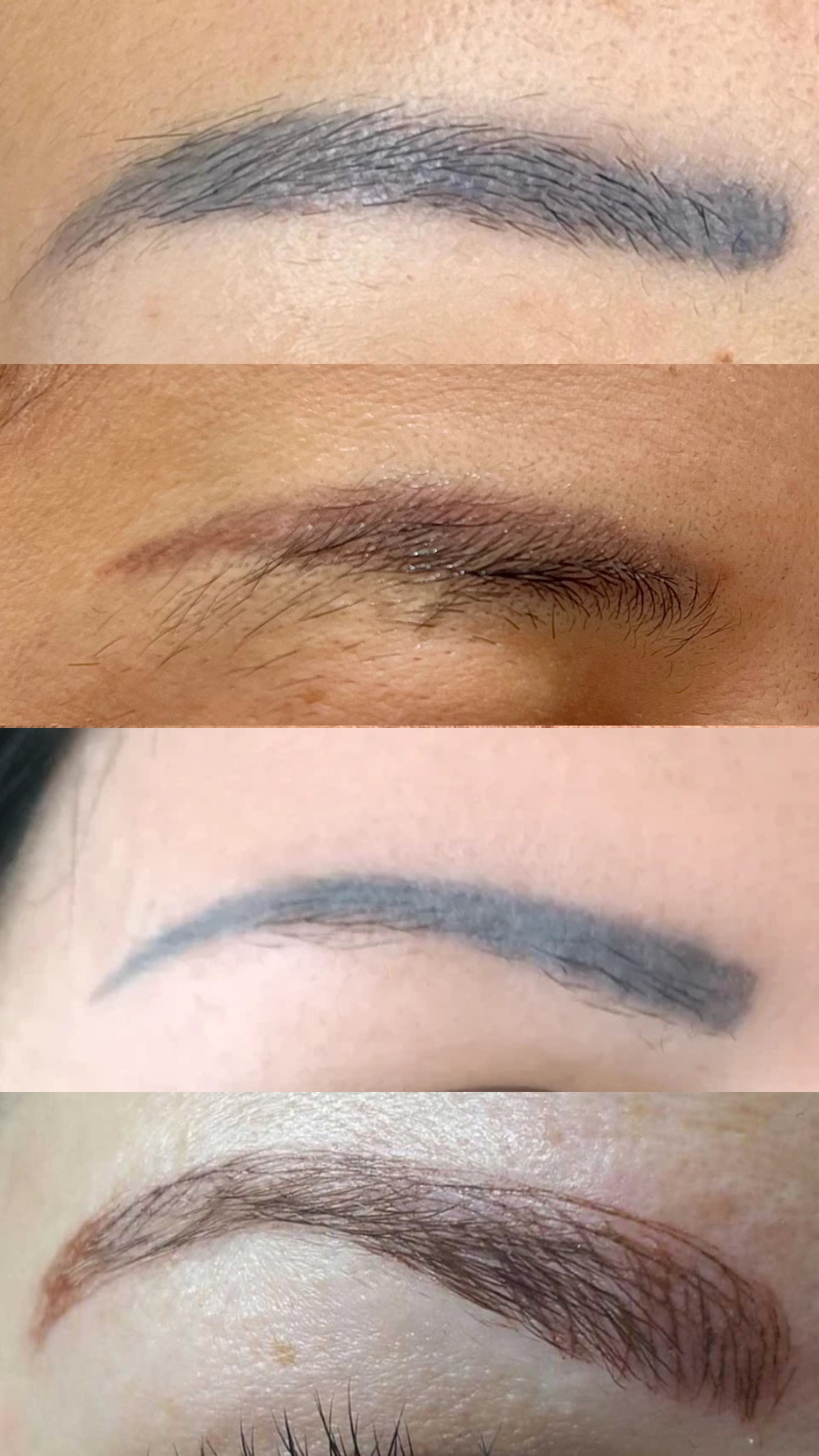
Why can't I just tattoo a lighter brown over the top?
This is probably one of the biggest misconceptions I hear.
Cosmetic tattoo pigment isn't like paint. I can't simply put a lighter brown over a dark grey, blue or heavily saturated brow and make the old tattoo disappear.
The pigment we implant into the skin is translucent, which means the old tattoo underneath will still influence what you see once the new tattoo has healed.
Adding more pigment to an already saturated tattoo will actually make the problem worse, creating brows that heal darker, muddier and more uneven.
And unfortunately, no amount of skill on my part can create a soft, natural result if I'm trying to work over a canvas that is already full of pigment.
Sometimes, removal really is the best option.
If your existing cosmetic tattoo is too dark, too saturated, the wrong colour or sitting outside the shape we want to create, I may recommend lightening or a complete removal before tattooing again.
Often, we simply need to remove enough of the old pigment to give us room to work again.
It gives me a cleaner canvas, more control over your new shape and colour, and most importantly, a much better chance of creating the soft, natural healed result you're actually coming to me for.
I'd much rather tell you that you need removal first than add another layer of pigment and give you a result I already know you won't be happy with.
Before I tattoo over any existing cosmetic tattoo, I need to assess what's already sitting in the skin.
How dark is it? What colour has it faded to? How saturated is it? Is the existing shape something we can work with? And most importantly, can I realistically create the result you want without adding to the problem?
Sometimes the answer is yes.
Sometimes, we need to lighten the old tattoo first.
How can old cosmetic tattoo be removed?
There are several methods used to lighten or remove cosmetic tattooing, including laser and non-laser removal techniques.
Laser tattoo removal uses specific wavelengths of light that are absorbed by tattoo pigment. The energy breaks larger pigment particles into smaller fragments, allowing your body's immune system to gradually clear them over the weeks following treatment.
Different pigment colours and ingredients respond differently to laser, which is particularly important with cosmetic tattoo pigments. Some pigments can temporarily change colour or darken when treated with certain laser wavelengths, which is why cosmetic tattoo removal should be approached differently to a standard black body tattoo. It’s important that your laser tattoo removalist understands the different types of pigments that are used in cosmetic tattooing.
Non-laser removal methods, including saline and specialised chemical removal systems, work differently. Rather than using light energy to target the pigment, these treatments create a controlled process within the tattooed skin with the aim of reducing the amount of visible pigment over a series of treatments.
There isn't one removal method that's automatically right for every tattoo. The pigment colour, depth, saturation, ingredients, skin type and previous tattoo history all need to be considered before deciding how to proceed.
Do I need my cosmetic tattooing completely removed?
Not necessarily.
This is an important distinction because when I recommend removal, clients sometimes assume I'm telling them they need to walk around with absolutely no eyebrows before I'll tattoo them again.
That's usually not the goal.
I often just need the existing tattoo light enough to give me a workable canvas.
Once enough of the old pigment has been removed, we can reassess the brows and decide whether they're ready to be tattooed again or whether further lightening would give us a better result.
Sometimes the best “refresh” is no refresh at all.
Cosmetic tattooing shouldn't automatically be refreshed every year simply because another year has passed.
If there's still plenty of pigment in your skin, adding more isn't going to make your brows look better, it’s likely to make them look worse!
Good cosmetic tattooing is about knowing when to add pigment — and when NOT to.
If I look at your brows and tell you I think they need to be lightened before I'll tattoo them, I'm not trying to make the process harder or sell you an extra treatment.
I'm telling you because I genuinely don't believe adding another layer of pigment will give you the result you're hoping for.
I'd rather start with a better canvas and create brows that can heal soft and natural than keep layering pigment over something that already needs to be addressed.